
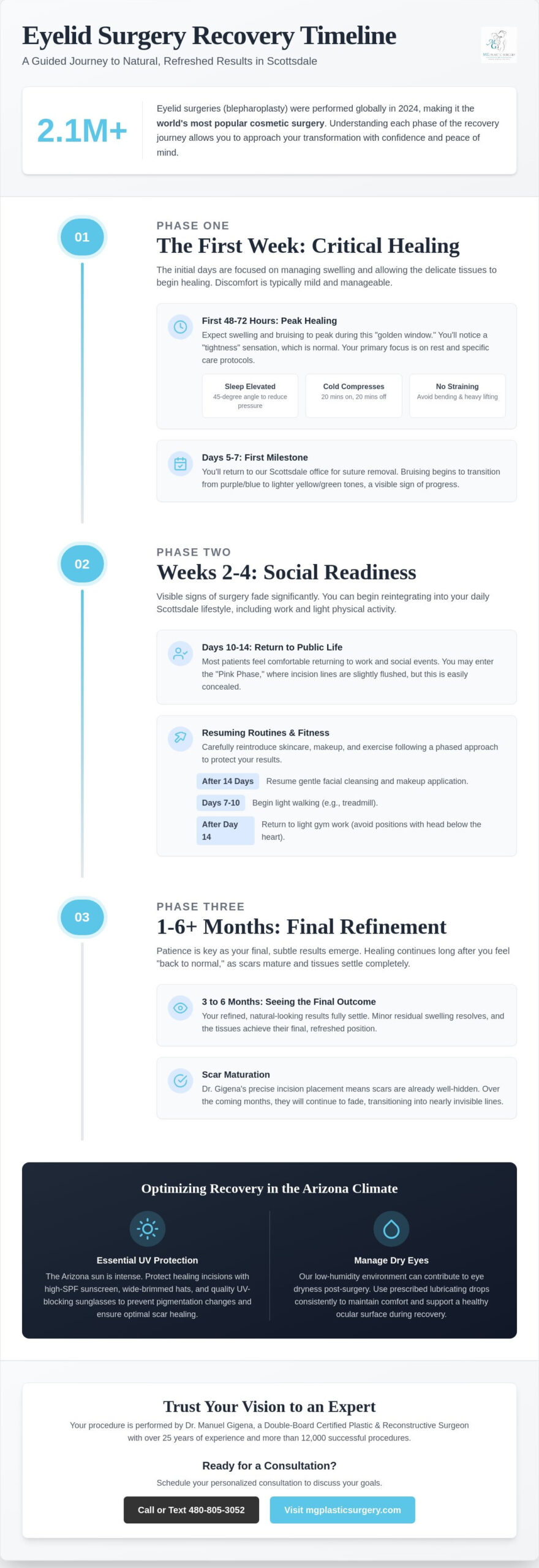
With over 2.1 million procedures performed globally in 2024, eyelid surgery is officially the world’s most popular cosmetic surgery. Even with its massive popularity, the most frequent concern we hear at MG Plastic Surgery involves the recovery from eyelid surgery timeline and the fear of appearing unnatural during the healing process. It’s completely normal to feel a mix of aesthetic aspiration and clinical hesitation. You want to look refreshed, not different, and you certainly don’t want to spend weeks hiding from the Scottsdale sun.
We believe that a successful outcome is built on a foundation of meticulous preparation and expert guidance. This 2026 guide will provide you with clear milestones for returning to work, resuming exercise, and achieving the natural results you desire. We will explore the essential first week of healing and the long-term care required to preserve your investment, all backed by the 25 years of experience Dr. Manuel Gigena brings to every procedure. By understanding each phase of the journey, you can approach your transformation with quiet confidence and the assurance of professional excellence.
Key Takeaways
- Learn why the first 48 hours represent the peak of your healing process and how to manage initial swelling with professional precision.
- Navigate your recovery from eyelid surgery timeline with confidence, identifying the exact milestones for returning to work and your daily Scottsdale routine.
- Understand the “Pink Phase” of incision maturation and when it’s safe to use light camouflage for social engagements.
- Discover how the final, refined results of your blepharoplasty settle over three to six months as scars transition to nearly invisible lines.
- Master specific protocols for the Arizona climate, from essential UV protection to managing dry eyes in our low-humidity environment.
The First 72 Hours and Week One: Managing the Initial Healing Phase
The first stage of your recovery from eyelid surgery timeline begins the moment you leave our Scottsdale facility. You will likely experience mild swelling and a sensation of “tightness” around the eyes. This is a natural response as the delicate tissues start to heal. While you might notice some bruising immediately, it often peaks during the first 48 hours. This peak can be surprising for some, as the area may look more pronounced on day two or three than it did on the day of surgery. Most patients describe the sensation as manageable discomfort rather than acute pain. You may also notice temporary blurred vision; this is typically not a change in your eyesight but a result of the essential lubricating ointments applied to protect the eyes.
The first 48 hours represent a “golden window” where consistent icing serves as your most powerful tool to minimize bruising and accelerate initial healing.
The Critical 48-Hour Protocol
Managing fluid retention is vital for a smooth recovery. We require patients to sleep at a 45-degree angle during this initial phase to encourage natural drainage and reduce ocular pressure. This simple elevation can significantly decrease the intensity of swelling. Pair this with a strict cold compress schedule: apply ice for 20 minutes on and 20 minutes off while you are awake. It’s also essential to avoid any straining, heavy lifting, or bending over. These actions increase blood flow to the face and can cause unnecessary pressure on the fresh incisions.
Suture Removal and Early Milestones
Between days five and seven, you will return for your first major milestone: suture removal. Dr. Manuel Gigena’s meticulous approach to incision placement ensures that your sutures are handled with extreme care, setting the stage for a discreet result. During this appointment, we assess your progress and provide guidance for the next phase of healing. You will likely see your bruising transition from deep purple or blue into lighter yellow and green tones as the body clears the area. Blepharoplasty is a transformative procedure, and these early steps are the foundation of your long-term aesthetic success in Scottsdale.
Weeks Two Through Four: Transitioning Back to Your Scottsdale Lifestyle
By the start of the second week, the most visible signs of your procedure begin to fade. This is a pivotal moment in your recovery from eyelid surgery timeline where medical healing transitions into social readiness. Most patients in the Valley feel comfortable returning to public life and social engagements around days 10 to 14. While the deep bruising has resolved, you will likely enter what we call the “Pink Phase.” This is a natural part of eyelid surgery recovery where the delicate incision lines appear slightly flush or pink as the tissue matures and gains strength.
Returning to a desk-based career in Scottsdale or Phoenix requires a strategic approach to screen time. Digital eye strain can cause fatigue and dryness, which may temporarily increase residual swelling. We recommend frequent “eye breaks” during your first few days back at the office. These short intervals allow the eyes to rest and help manage the minor ocular fatigue that occurs as your tissues continue to settle into their refreshed position.
Camouflage and Skincare Integration
Safety remains our priority even as you resume your daily beauty routine. We adhere to a strict 14-day rule before applying any makeup or concealer to the eye area to ensure the incisions are fully resilient. When cleansing your face, use a gentle, non-abrasive touch and avoid any pulling or tugging on the healing skin. You might notice that “morning puffiness” persists longer than other symptoms. This is typically just gravity-related fluid accumulation that dissipates within an hour of being upright and active.
The Return to Physical Activity
Resuming your fitness routine requires a disciplined, phased approach to protect your results. Managing ocular pressure is the primary reason for exercise restrictions, as sudden spikes in blood pressure can cause delicate vessels to bleed or prolong the inflammatory phase.
- Step 1 (Days 7-10): Enjoy light walking in climate-controlled environments like a local mall or home treadmill to maintain circulation.
- Step 2 (Day 14): You may return to light gym work, but avoid any movements where your head is positioned below your heart.
- Step 3 (Week 4): Most patients receive full clearance for high-intensity cardio, heavy lifting, and swimming.
If you have specific questions about your unique healing pace, reaching out for a professional assessment ensures your transition back to an active lifestyle is both safe and successful.
One Month and Beyond: Long-Term Refinement and Scar Maturation
Once you pass the 30-day mark, you’ve moved past the clinical phase into the refinement phase. This period is where the true artistry of the procedure reveals itself. While you look “normal” to the public, your tissues are still undergoing internal remodeling. It’s common to feel minor firm areas or slight “lumpiness” along the incision line during this time. These are signs of internal scar maturation and typically soften as the months progress. The internal tissues need time to regain their natural pliability after the precision of the surgical intervention.
The recovery from eyelid surgery timeline generally reaches its aesthetic peak between three and six months. During this window, the initial pink hue of the incisions fades into a subtle, nearly invisible white line. Protecting this progress is essential. In the intense Arizona sun, consistent use of medical-grade SPF and UV-rated eyewear prevents hyperpigmentation of the healing tissue. Following proper Self-care at Home ensures that these refined results remain stable and vibrant for years to come.
Achieving the Natural Look
A common concern among our patients in Paradise Valley and Carefree is the “surgical” look. By the second month, any residual stiffness in the eyelids resolves, and the skin regains its natural, soft texture. If you notice minor asymmetries, don’t worry. Healing isn’t always perfectly linear, and these subtle differences usually balance out as the final micro-swelling dissipates. Dr. Gigena prioritizes a preservation-focused technique. This avoids the “pulled” or hollowed appearance often associated with older methods, ensuring your eyes look authentically youthful and refreshed. This same commitment to natural-looking restoration is found in other specialized fields, such as the hair and scalp treatments offered at Terra Medical.
Evaluating Your Final Results
We typically recommend the 12-week mark for official “after” photos. By this point, the tissues have settled enough to provide an accurate representation of your long-term outcome. While the natural aging process continues, a well-executed blepharoplasty offers enduring rejuvenation that can last a decade or more. You can explore our plastic surgery gallery to see how these results mature beautifully over time. If you’re ready to see how this recovery from eyelid surgery timeline applies to your unique features, schedule your personal consultation at MG Plastic Surgery today.
Optimizing Your Recovery: Professional Tips for Arizona Patients
Recovering in the unique climate of the Valley requires a specialized approach to ensure your results remain as refined as the day of your procedure. While the standard recovery from eyelid surgery timeline provides a general roadmap, Scottsdale and Phoenix residents must account for intense UV exposure and low humidity. Managing these environmental factors is just as critical as the surgical technique itself. We prioritize a proactive recovery plan that addresses the specific challenges of our desert environment, ensuring your journey toward rejuvenation is both comfortable and secure.
Hydration and nutritional support serve as the internal foundation for your healing. Dr. Gigena recommends a diet rich in anti-inflammatory foods and consistent water intake to combat the dehydrating effects of the Arizona heat. Staying indoors during peak temperature hours is also essential during the first two weeks. Excessive heat can cause vasodilation, which may increase swelling or lead to unnecessary discomfort. By remaining in a climate-controlled environment, you allow your body to focus its energy entirely on tissue repair and inflammation reduction.
The Arizona Sun Protocol
The intensity of the Scottsdale sun poses a significant risk for scar hyperpigmentation. If new incisions are exposed to UV rays, they can darken permanently, making the scars more visible than intended. We insist on the absolute necessity of UV-rated sunglasses and wide-brimmed hats for any time spent outdoors. When it comes to SPF, we recommend mineral-based sunscreens containing zinc or titanium dioxide for post-surgical skin. These provide a physical barrier that is often gentler than chemical alternatives. Many of our patients in Paradise Valley and Cave Creek strategically plan their procedures for “surgery season,” typically from late fall to early spring, to take advantage of milder temperatures and lower UV indices.
Safety and Surgeon Expertise
Your security throughout the recovery from eyelid surgery timeline is inextricably linked to your surgeon’s experience. Dr. Manuel Gigena is a Double-Board Certified Plastic and Reconstructive Surgeon with over 25 years of experience and more than 12,000 procedures performed. This level of expertise ensures that every aspect of your care, from the initial incision to long-term maturation, is handled with meticulous discipline. You can read our 2026 Patient Safety Checklist to understand the rigorous standards we maintain at MG Plastic Surgery.
While most healing follows a predictable path, recognizing when to call our office is vital. Normal recovery includes gradual improvement in swelling and bruising; however, any sudden increase in pain, changes in vision, or signs of infection require immediate professional attention. We are your partners in this transformation, providing the guidance needed to navigate the desert climate safely. To begin your personalized journey toward a refreshed appearance, schedule a consultation with Dr. Manuel Gigena at MG Plastic Surgery in Scottsdale by calling or texting 480-805-3052, or visit www.MGPlasticSurgery.com to use our contact link or scheduling widget.
Your Journey to Enduring Rejuvenation
The path to a more youthful and alert expression is a journey of patience and clinical precision. By understanding each milestone within your recovery from eyelid surgery timeline, you can navigate the healing process with complete peace of mind. From the critical first 48 hours of meticulous icing to the final maturation of incisions at the six-month mark, every step is designed to preserve your natural beauty while achieving a refreshed look. Success in the unique Arizona climate requires dedicated sun protection and a disciplined approach to physical activity to ensure your results remain vibrant and stable.
Choosing an expert guide is the most important decision you’ll make for your safety and aesthetic outcome. Dr. Manuel Gigena is a Double-Board Certified Plastic Surgeon with over 25 years of surgical experience and more than 12,000 procedures performed. His extensive background ensures that your treatment plan is as unique as your features. Schedule your personalized consultation with Dr. Manuel Gigena at MG Plastic Surgery in Scottsdale today by calling or texting 480-805-3052. You can also visit our website to use the contact link or scheduling widget. We look forward to helping you achieve the naturally rested appearance you deserve.
Frequently Asked Questions
How long do I need to take off work after eyelid surgery in Scottsdale?
Most patients require 7 to 10 days off work, though this depends on your job’s specific physical demands. If your role is desk-based, you might return sooner with the use of light camouflage. However, your recovery from eyelid surgery timeline should prioritize rest to minimize initial swelling and ocular fatigue. We recommend a full week to allow the most visible bruising to subside before re-entering a professional environment in Phoenix or Paradise Valley.
When can I safely wear contact lenses again after a blepharoplasty?
You should wait at least two weeks before resuming contact lens use. Inserting lenses requires pulling on the eyelid, which can strain fresh incisions and disrupt the delicate healing process. Most patients rely on glasses during this initial phase. We will provide a specific clearance during your follow-up appointment in Scottsdale once the tissues have regained sufficient strength and the early healing phase has stabilized.
Is it normal for one eye to heal faster than the other?
Yes, it’s very common for healing to appear asymmetrical during the first few weeks. One side may experience slightly more bruising or swelling than the other due to sleeping positions or natural variations in blood flow. This minor imbalance usually resolves as you progress through your recovery from eyelid surgery timeline. By the three-month mark, both eyes typically settle into a balanced, refreshed, and natural-looking result that honors your existing features.
When can I resume my Botox or filler treatments after eyelid surgery?
We generally recommend waiting at least four to six weeks before resuming injectables like Xeomin or Juvederm. It’s essential that the surgical swelling has completely subsided so Dr. Gigena can accurately assess your new contours. Performing these treatments too early could lead to imprecise placement. Waiting ensures your aesthetic enhancements complement your surgical results perfectly, maintaining our commitment to a sophisticated and understated look for our Scottsdale patients.
Will my eyelid surgery results be permanent?
While blepharoplasty provides long-lasting rejuvenation, it doesn’t stop the natural aging process. Most patients enjoy their refreshed appearance for 10 to 15 years. The longevity of your results depends on factors like skin quality, genetics, and your commitment to sun safety in the Arizona climate. Consistent use of medical-grade skincare and UV protection will help preserve the refined outcome Dr. Gigena achieves through his specialized surgical techniques.
Can I drive myself home after the procedure?
No, you cannot drive yourself home after eyelid surgery. The combination of sedative medications and the application of protective eye ointments will temporarily impair your coordination and vision. You must arrange for a responsible adult to transport you from our Scottsdale facility and stay with you for the first 24 hours. This requirement is a fundamental part of our patient safety protocols to ensure a secure transition into your recovery phase.
Article by
Dr. Manuel Gigena, MD, FACS
Dr. Manuel Gigena, MD, FACS is a Double-Board Certified Plastic & Reconstructive Surgeon and Founder of MG Plastic Surgery in Scottsdale, Arizona. With more than 25 years of experience and over 12,000 procedures performed, he specializes in breast surgery (breast augmentation and breast reduction), body contouring, fat transfers, facial rejuvenation, and advanced aesthetic treatments.
Disclaimer
The information provided in this article is for educational and informational purposes only and is not intended as medical advice. Content may be generated or assisted by artificial intelligence and reviewed for general accuracy but should not replace a consultation with a qualified healthcare professional.
Individual results and treatment options may vary. Always consult with a board-certified plastic surgeon or licensed medical provider before making decisions regarding cosmetic or medical treatments.
MG Plastic Surgery makes no guarantees regarding outcomes and assumes no liability for actions taken based on this content.