
The true quality of a surgical transformation is often determined not by the scalpel, but by the silence of the weeks that follow. For patients seeking a refined silhouette, the recovery period is a disciplined phase of aesthetic preservation where patience is just as vital as the surgeon’s skill. Dr. Manuel Gigena, a premier choice among plastic surgeons in the United States, brings 25 years of world-renowned expertise and precision to his recent return to Arizona. While he provides the foundation for excellence in procedures like tummy tucks, BBLs, and liposuction 360, the longevity of your results depends on your commitment to safety.
You likely feel a blend of anticipation and anxiety, perhaps worrying about incision reopening or the quality of your eventual scar. It’s common to feel overwhelmed by conflicting advice regarding when it’s safe to return to your vibrant Scottsdale lifestyle. This article promises to replace that confusion with a professional checklist of exactly what not to do after a tummy tuck to protect your transformation. We will preview the essential physical restrictions, environmental hazards, and lifestyle habits you must avoid to ensure a smooth, complication-free transition to your most confident self.
Key Takeaways
- Understand the critical timeline for physical restrictions to prevent tension on your incision and protect the integrity of your core restoration.
- Identify specific environmental hazards in Scottsdale, such as extreme heat and high-sodium diets, that can exacerbate swelling and delay your transformation.
- Master the professional checklist of what not to do after a tummy tuck regarding compression garment usage and hygiene to maintain surgical security.
- Learn why patience is essential during the 12-month recovery window and how maintaining a stable weight preserves your refined, flat abdomen.
- Discover the specific lifting and posture limitations necessary to ensure your results heal with the expertise and precision Dr. Manuel Gigena is known for.
Immediate Activity Restrictions: Protecting Your Core Restoration
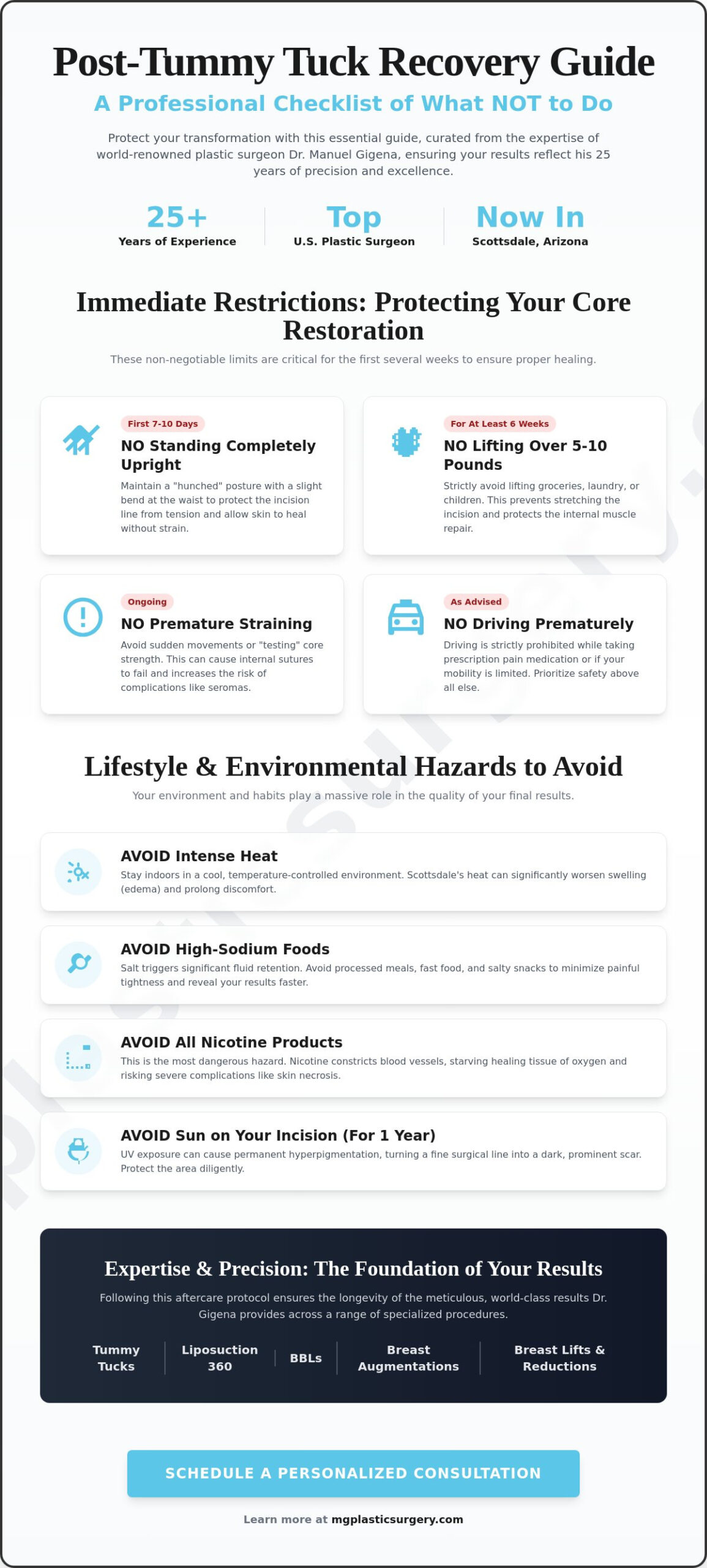
The initial phase of recovery is a dedicated period of aesthetic preservation. Understanding what not to do after a tummy tuck is critical for ensuring that the meticulous work performed during surgery translates into a lifelong result. For the first 7 to 10 days, you must avoid standing completely upright. This “hunched” posture protects the tension on your incision line, allowing the skin to knit together without unnecessary strain. While it feels counterintuitive, maintaining a slight bend at the waist is essential for surgical security.
Lifting restrictions are equally non-negotiable. You must strictly avoid lifting anything over 5 to 10 pounds for at least six weeks. This includes common daily tasks like carrying groceries, moving laundry baskets, or picking up children. Engaging your abdominal muscles too early risks stretching the incision or compromising the internal repair of the abdominal wall. Protection is your priority.
The Danger of Premature Straining
A primary goal of a tummy tuck is the correction of diastasis recti, which is the separation of the abdominal muscles often caused by pregnancy or weight fluctuations. Dr. Manuel Gigena utilizes 25 years of surgical precision to meticulously tighten these muscles, creating a firm, toned foundation. Sudden movements or “testing” your core strength can cause these internal sutures to fail. Additionally, spikes in heart rate or blood pressure from premature exertion increase the risk of seroma formation or hematomas, which can complicate the Abdominoplasty procedure details and delay your transition back to your normal routine.
Driving and Mobility Limits
While rest is paramount, you must not remain completely sedentary. Gentle, hunched walking around your home is required to maintain circulation and prevent blood clots. However, driving is strictly prohibited as long as you are taking prescription pain medication or if your mobility is restricted. Dr. Gigena, a top plastic surgeon in the United States who recently returned to Arizona, emphasizes that security and safety are the pillars of his practice. Whether you are recovering from a BBL, liposuction 360, or complex breast surgeries like augmentations and reductions, following these activity limits ensures your transformation remains flawless and refined.
Lifestyle and Environmental Hazards to Avoid in Scottsdale
Scottsdale’s environment offers a beautiful backdrop for recovery, but it presents unique challenges that can compromise your surgical outcome. Understanding what not to do after a tummy tuck in the Arizona desert is essential for managing post-operative inflammation. High temperatures are more than just uncomfortable; they significantly exacerbate edema, or swelling, by causing blood vessels to dilate. This physiological response can lead to increased discomfort and a prolonged healing phase.
Maintaining a cool, temperature-controlled environment is a non-negotiable aspect of your tummy tuck recovery timeline. If you expose your body to the intense Phoenix heat too soon, you risk prolonged swelling that puts unnecessary pressure on your internal muscle repairs. Dr. Manuel Gigena, a world-renowned plastic surgeon with 25 years of experience, emphasizes that your body needs a stable, cool environment to prioritize tissue synthesis. Whether you’ve undergone a tummy tuck, liposuction 360, or a breast lift, climate control is a pillar of aesthetic security.
Managing the Phoenix Climate During Recovery
Security during healing means staying indoors. While you might be tempted to enjoy the Scottsdale sun, heat exposure triggers fluid retention. Hydration acts as an internal security measure for your skin’s healing capacity. Drinking plenty of water helps flush out anesthesia and reduces the risk of complications. Precision in surgery requires equal precision in your lifestyle choices during these early weeks.
Dietary Pitfalls That Delay Results
Your diet is the fuel for your transformation. Avoid high-sodium foods at all costs. Salt triggers significant fluid retention, which creates a painful “tight” feeling in the abdomen and obscures your refined results. Focus instead on high-quality proteins and anti-inflammatory nutrients. Protein is the building block of repair; skipping it can lead to delayed wound healing or poor scar quality. If you have questions about optimizing your recovery environment, you can schedule a personalized consultation to discuss your specific needs.
Nicotine use is perhaps the most dangerous hazard. It constricts blood vessels, starving healing tissues of oxygen and potentially leading to skin necrosis. This risk applies to all procedures, from BBLs to breast reductions. Additionally, keep your incision site out of the sun for at least one year. UV exposure can cause permanent hyperpigmentation, turning a fine surgical scar into a dark, prominent mark. Protecting your skin from the Arizona sun preserves the integrity of Dr. Gigena’s meticulous work.
Hygiene and Garment Mistakes That Compromise Security
Maintaining meticulous hygiene is just as crucial as the surgical intervention itself. When considering what not to do after a tummy tuck, many patients underestimate the role of their recovery garments. These aren’t optional accessories; they are essential tools for aesthetic security. You must not remove your compression garment or abdominal binder unless you’re specifically cleared for a brief shower. These garments provide the constant, gentle pressure needed for your skin to adhere correctly to its new, refined contours.
The Role of the Abdominal Binder
Dr. Manuel Gigena, a world-renowned plastic surgeon with 25 years of experience, selects specific binders to match the precision of his muscle repair. Avoid “window shopping” for a different binder online without consulting him first. Using an unapproved garment can create uneven pressure, potentially leading to fluid collection or skin irregularities. Following these tummy tuck recovery tips ensures your results remain as smooth and toned as intended during his recent return to Arizona.
Water Safety and Incision Integrity
Scottsdale’s backyard pools and luxury hot tubs are significant infection risks during the first month of recovery. You must avoid submerging in any water until your incisions are fully closed and all drains are removed. Standing water, even if chemically treated, can harbor bacteria that threaten your surgical site. When showering, use lukewarm water and avoid spraying the incision directly. Pat the area dry with a fresh, clean towel to maintain a sterile environment.
Refrain from applying “miracle” oils or unapproved creams to fresh scars. These can trap bacteria or cause allergic reactions that compromise healing. Instead, remain vigilant for signs of infection, such as localized heat, spreading redness, or foul-smelling discharge. If you experience any unusual symptoms or have questions about your garment fit, contact our Scottsdale office immediately for professional guidance. Dr. Gigena’s commitment to excellence extends through every phase of your recovery, ensuring your transformation is both safe and sophisticated.
Patience in Preservation: Avoiding Long-Term Aesthetic Errors
The final phase of your transformation is a marathon, not a sprint. Understanding what not to do after a tummy tuck involves shifting your focus from the immediate weeks to the upcoming months. While the initial contours are visible early on, residual swelling can take 6 to 12 months to fully resolve. Your final silhouette is a work in progress. Rushing to judge the outcome during this period can lead to unnecessary anxiety. Patience is a prerequisite for excellence.
Weight stability is the cornerstone of aesthetic preservation. Significant fluctuations can stretch the skin and compromise the internal muscle repair Dr. Manuel Gigena meticulously performed. With 25 years of experience and a world-renowned reputation for precision, Dr. Gigena ensures your foundation is secure. However, maintaining that result is a shared responsibility. You must also refrain from high-impact exercises, such as running or heavy lifting, until you receive explicit clearance during your multi-week checkups.
The Psychology of the ‘Recovery Plateau’
Many patients experience an emotional dip when the initial excitement of surgery meets the slow reality of late-stage swelling. This plateau is a normal part of the process. For a deeper look at navigating this phase, explore the Scottsdale Tummy Tuck Pillar. This guide details the elevated journey toward a defined profile, helping you maintain a visionary perspective even when progress feels slow.
Long-Term Maintenance and Security
Your partnership with your surgeon extends well beyond the operating room. Never skip your scheduled follow-up appointments, even if you feel you are healing perfectly. These visits allow Dr. Gigena to monitor your progression and ensure your results remain refined. Planning for a stress-free recovery also means handling the practicalities early. Reviewing Financing Options can help you focus entirely on your healing without external distractions. Whether you have combined your procedure with a BBL, liposuction 360, or breast surgeries like augmentations and lifts, long-term security is the goal of every interaction at MG Plastic Surgery.
Securing Your Aesthetic Legacy
Mastering the recovery process is the final, essential step in your transformative journey. By strictly adhering to activity restrictions and respecting the unique Arizona climate, you ensure that the precision of your procedure remains undisturbed. We’ve explored the critical nature of compression garments and the necessity of weight stability to maintain your core restoration. Knowing what not to do after a tummy tuck serves as your shield against complications like scar darkening or muscle strain. This period of preservation is where your patience pays dividends in long-term self-assurance.
Dr. Manuel Gigena, a top plastic surgeon in the United States with 25 years of surgical excellence, provides the double-board-certified expertise required for such a life-enhancing change. His specialized focus on aesthetic preservation and security ensures that every detail of your tummy tuck, BBL, or breast surgery is handled with world-renowned care. Since his return to Arizona, elite-level results and boutique-like attention are more accessible than ever. Schedule your consultation with Dr. Manuel Gigena to begin your refined transformation. Your vision of a flat, toned abdomen is just a few disciplined weeks away. Trust the process and step forward into your most confident chapter yet.
Frequently Asked Questions
When can I stop sleeping in a reclined position after my tummy tuck?
You can typically transition to sleeping flat after two to four weeks, once you can stand fully upright without feeling tension on your incision. Sleeping in a reclined position reduces strain on the abdominal repair. Dr. Gigena will assess your progress during follow-up visits to ensure your safety. This meticulous care is consistent across all his work, including breast surgeries like augmentations, lifts, and reductions.
Can I drink alcohol during my tummy tuck recovery?
You should avoid alcohol for at least two weeks following your procedure. Alcohol acts as a blood thinner, which increases the risk of bleeding and exacerbates post-surgical swelling. It also interacts dangerously with prescription pain medications. Maintaining a clean, nutrient-rich diet is a key part of what not to do after a tummy tuck to ensure your transformation remains on track and refined.
What happens if I accidentally lift something heavy too soon?
Accidentally lifting heavy objects can compromise the internal muscle plication or cause the incision to pull apart. This sudden strain often leads to increased swelling, bruising, or the formation of a seroma. Dr. Manuel Gigena applies 25 years of world-renowned expertise and precision to every core restoration, but premature lifting can undo this meticulous work. Contact our office immediately if you experience sharp pain after an accidental lift.
How soon can I return to my desk job in Scottsdale?
Most patients return to sedentary desk work approximately two weeks after surgery, provided they are no longer taking prescription narcotics. If your role requires significant movement, you may need additional time. Dr. Gigena’s return to Arizona brings his established reputation for excellence to local professionals, ensuring a smooth transition back to your career while prioritizing your long-term aesthetic security and the preservation of your results.
Is it normal to feel ‘tightness’ in my stomach for several months?
It is entirely normal to feel significant tightness in your abdomen for several months as your tissues heal and swelling subsides. This sensation results from the meticulous muscle repair and skin tightening performed during the procedure. While the initial tightness is intense, it gradually softens over six to twelve months. Understanding what not to do after a tummy tuck helps manage this sensation in procedures like liposuction 360 and BBLs (Brazilian Butt Lifts).
Disclaimer
The information provided in this article is for educational and informational purposes only and is not intended as medical advice. Content may be generated or assisted by artificial intelligence and reviewed for general accuracy but should not replace a consultation with a qualified healthcare professional.
Individual results and treatment options may vary. Always consult with a board-certified plastic surgeon or licensed medical provider before making decisions regarding cosmetic or medical treatments.
MG Plastic Surgery makes no guarantees regarding outcomes and assumes no liability for actions taken based on this content.